
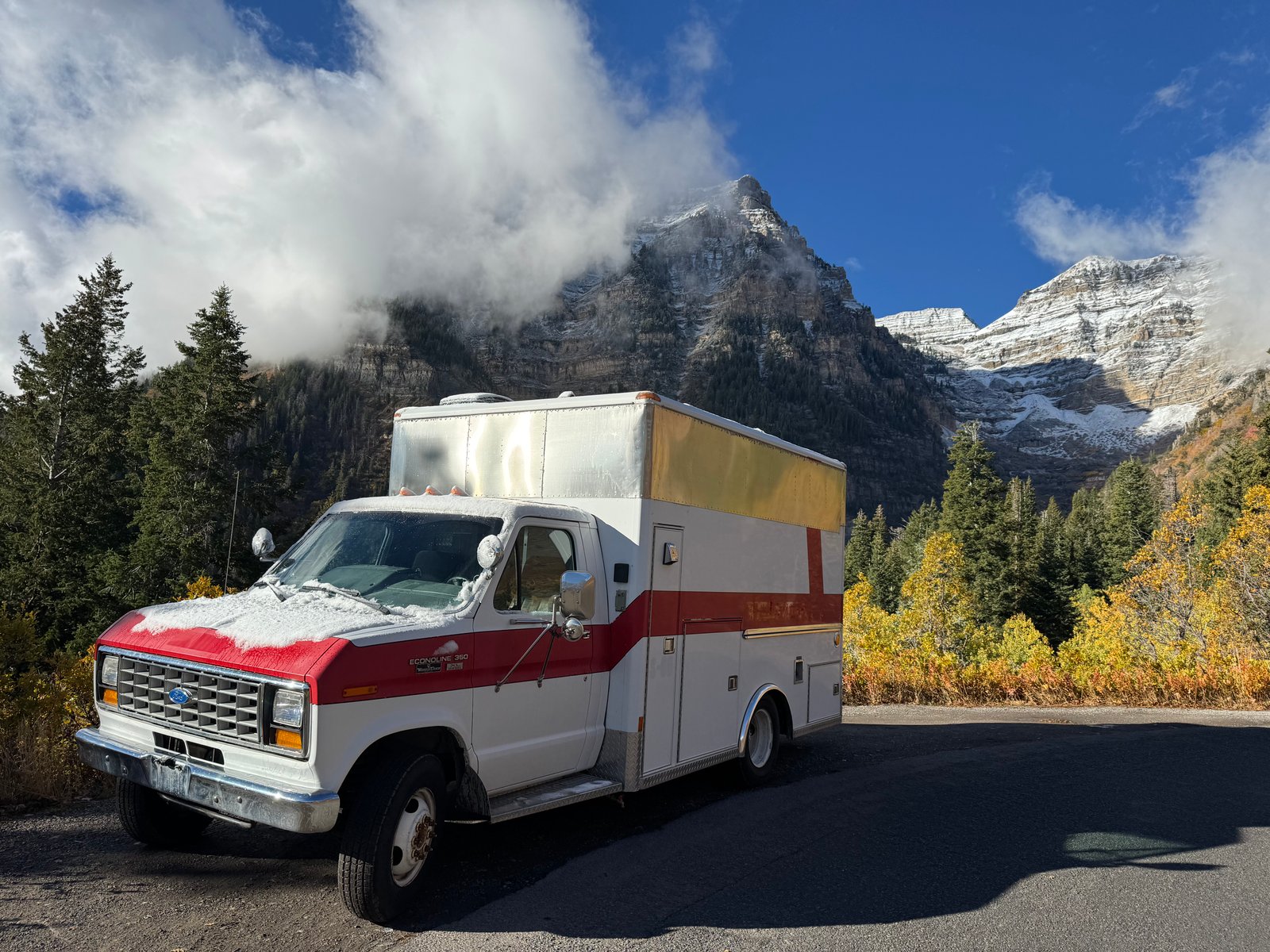
1990 Ford E350 Ambulance Conversion
This retired 1990 Ford E350 ambulance is my ongoing personal project to turn a former emergency vehicle into a cozy, fully off-grid camper. I am rebuilding the interior from the ground up with custom cabinetry, a full electrical and solar system, heating and cooling, and smart storage for long-term travel and content creation.



1990 Ford E350 Ambulance Conversion
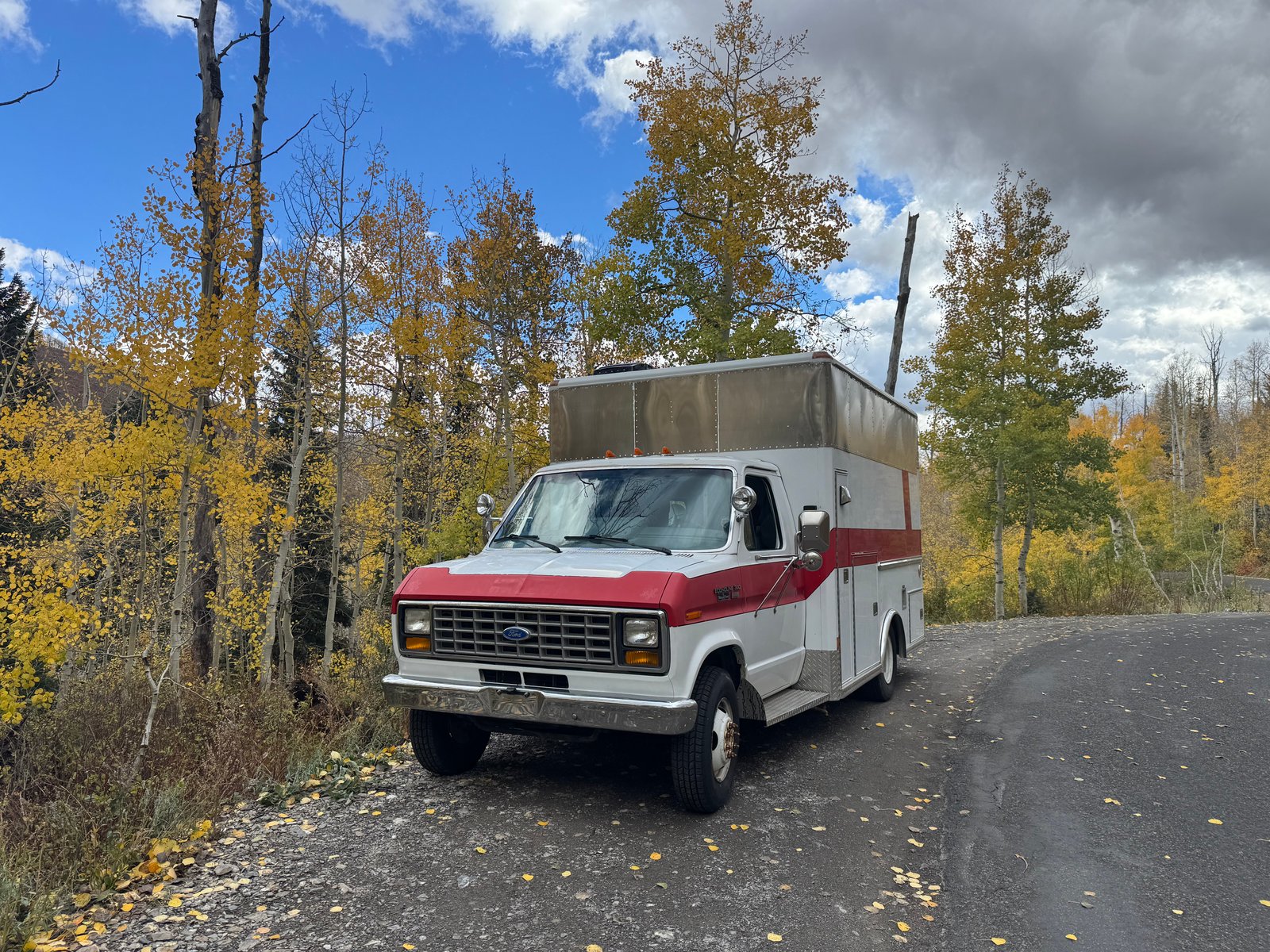
This project documents my full conversion of a decommissioned 1990 Ford E350 ambulance into a functional, comfortable tiny home on wheels. From gutting the original medical interior to designing a new layout, installing off-grid power, and building custom furniture, I’ve treated this build as both a design challenge and a hands-on engineering project.
The base vehicle is a retired 1990 Ford E350 ambulance with a heavy-duty chassis, built-in compartments, and tons of electrical routing from its previous life. I am converting it into an off-grid camper that can support long trips with solar power, climate control, water, and thoughtful storage while still looking clean and intentional inside.
Working with an older ambulance means dealing with unknown wiring, limited interior height, and lots of oddly shaped storage spaces. I also needed to fit a full-time bed, workspace, gear storage, plumbing, and a robust electrical system into a tight footprint, all while keeping weight reasonable and staying within a realistic budget as a student.
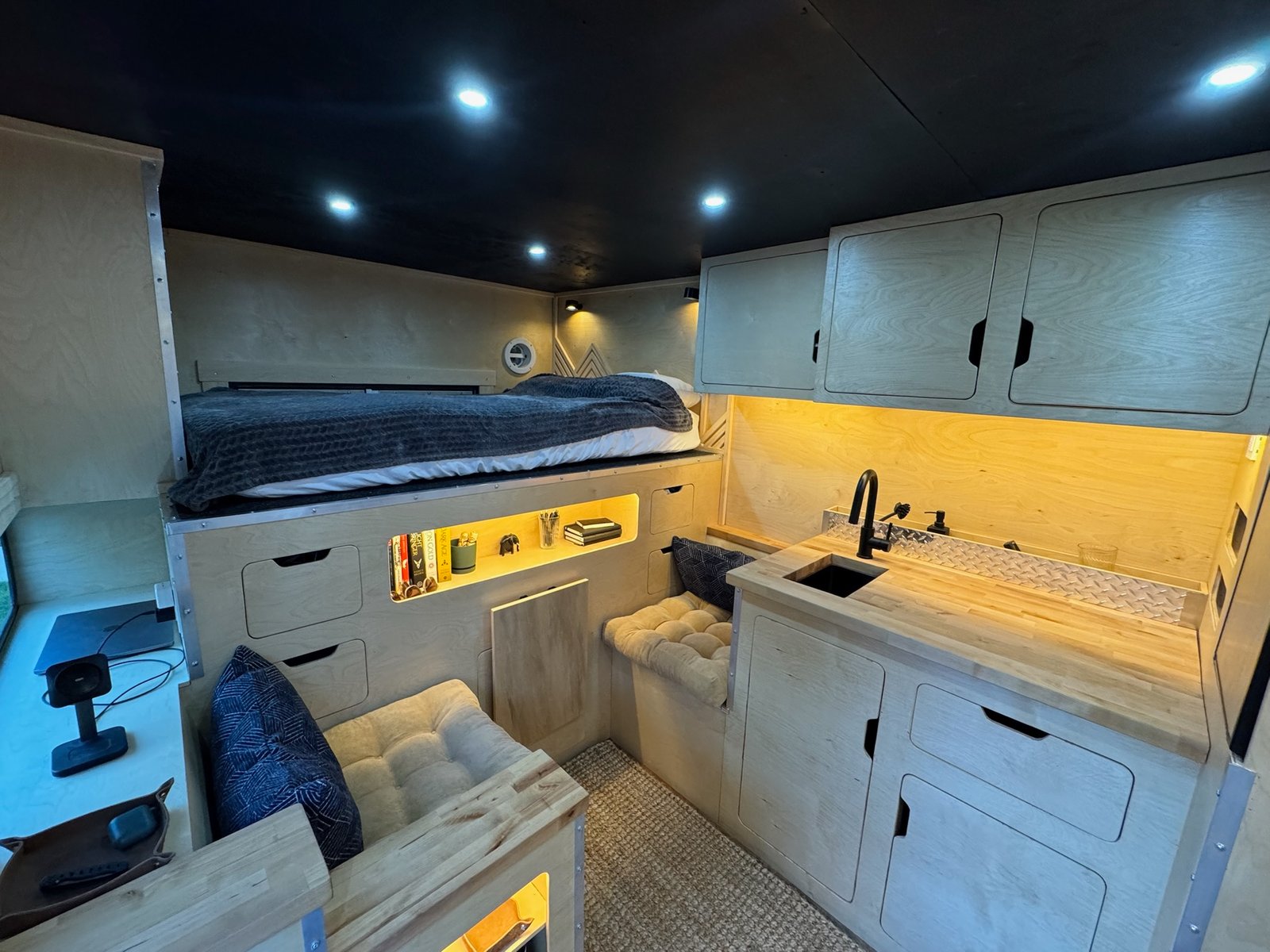
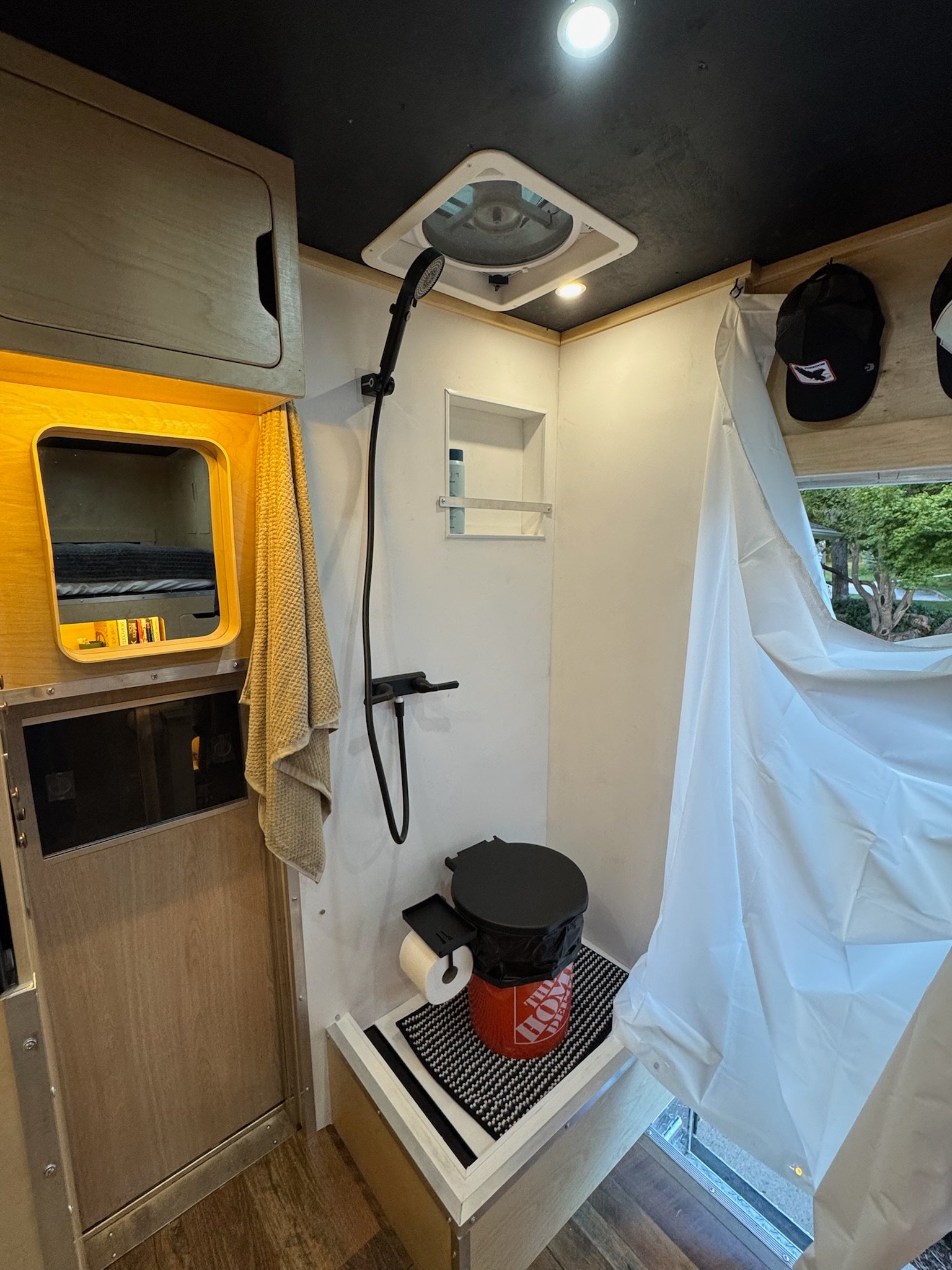
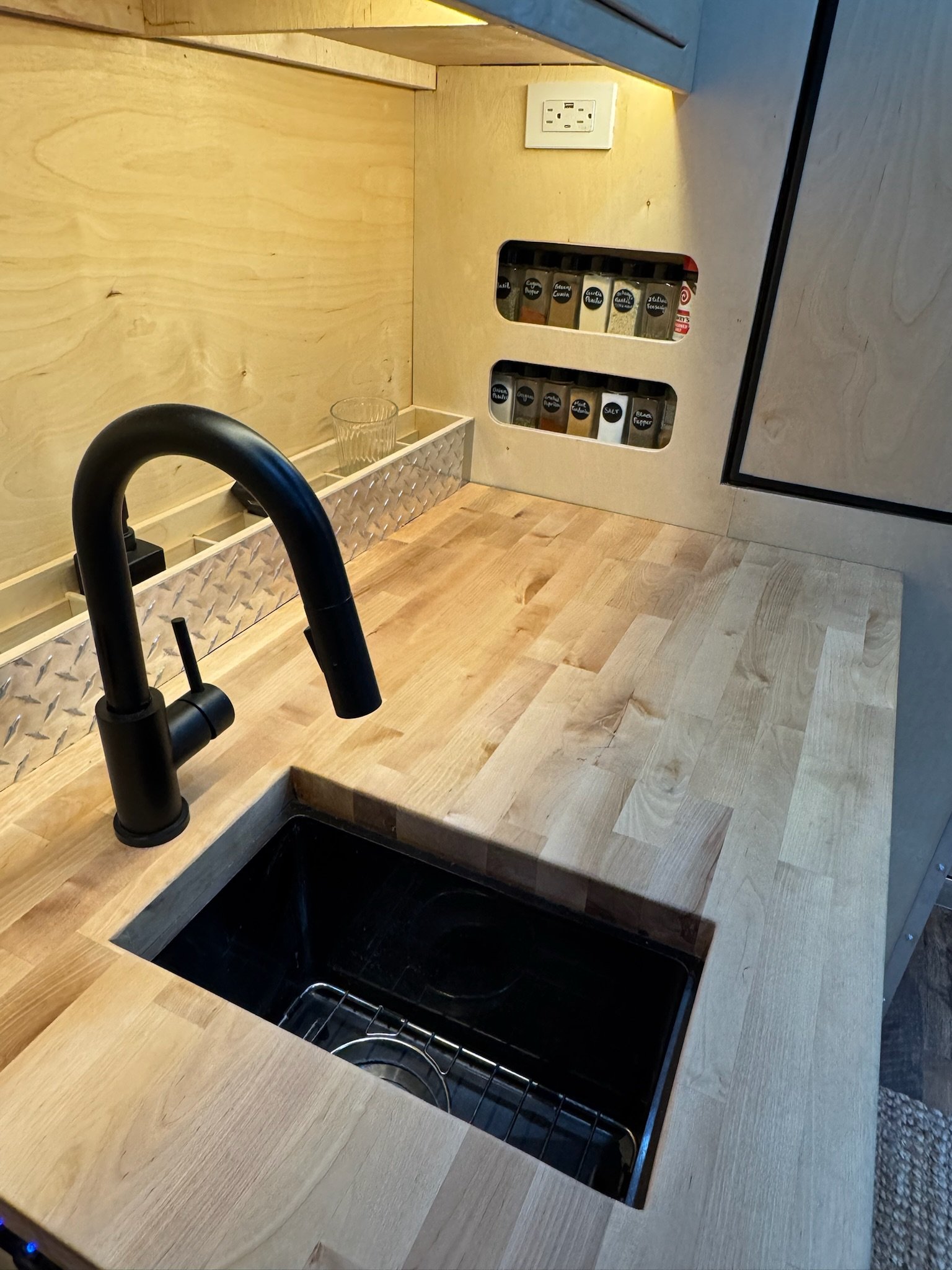
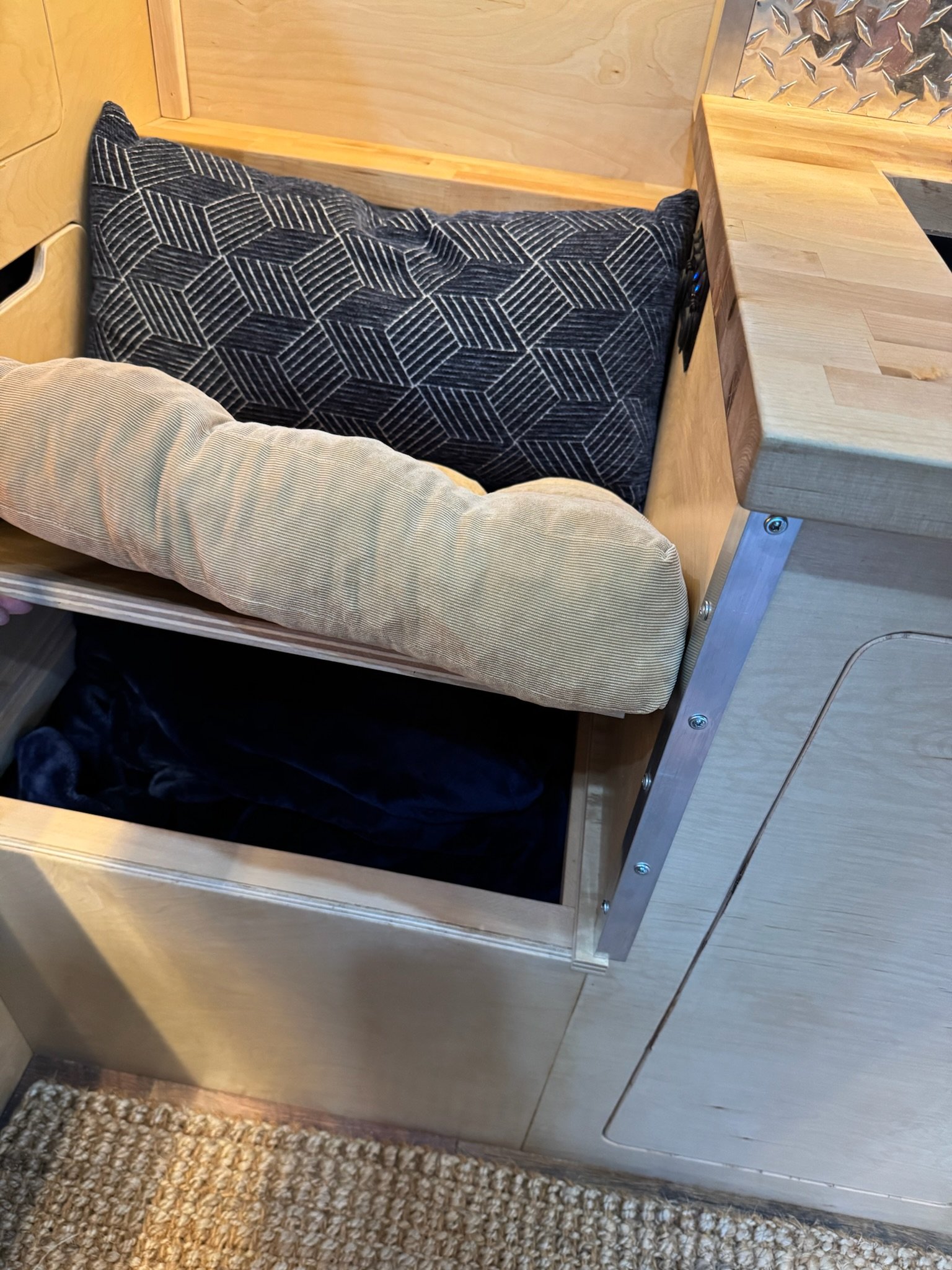
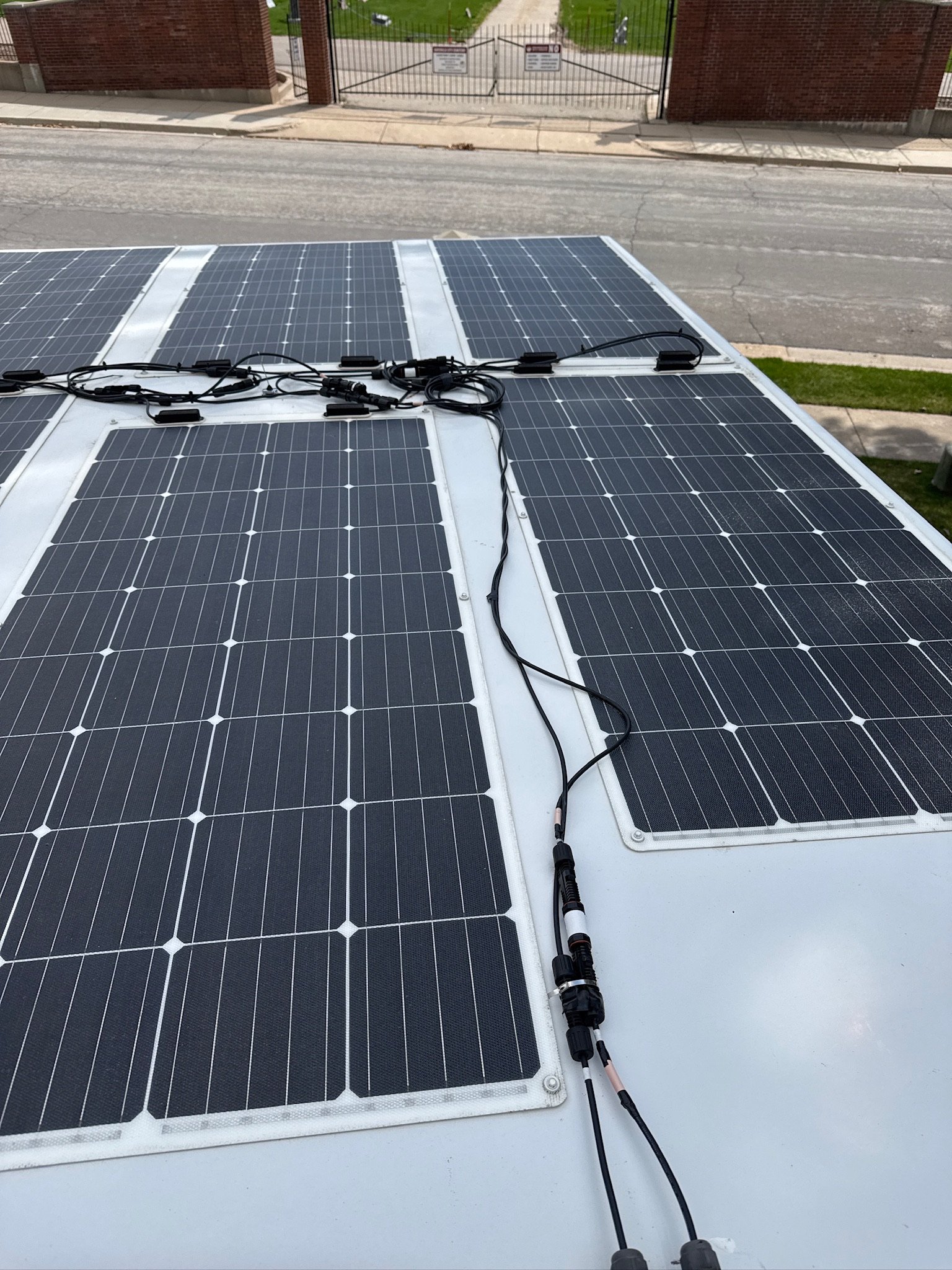
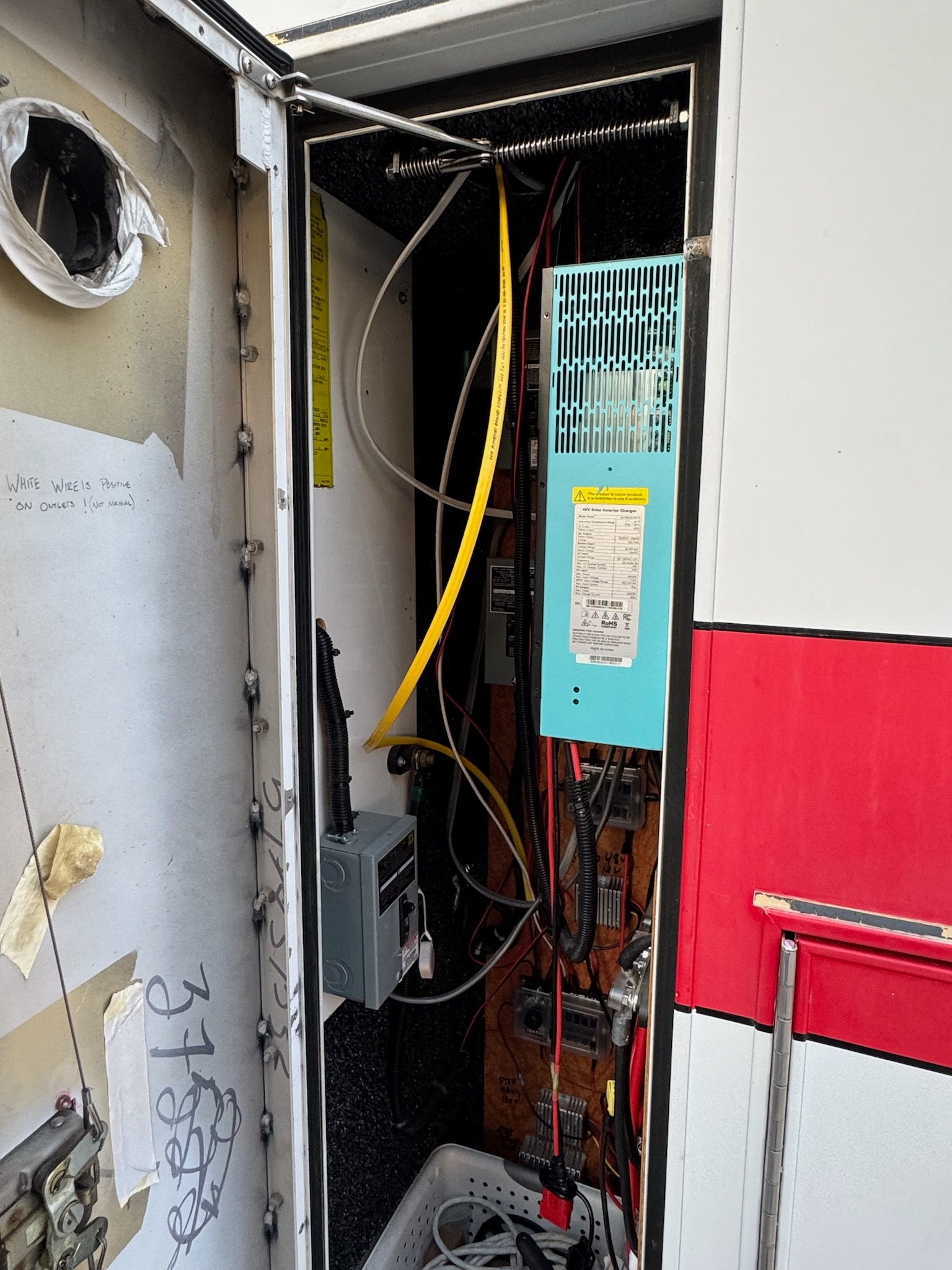
To solve these challenges, I designed a high-voltage solar system with Renogy 48V lithium batteries and a bank of flexible roof-mounted solar panels, raised the roof over the entire ambulance box to create real standing room, and installed a tankless water heater that feeds both the shower and sink plumbing. Inside, I custom built all of the cabinets, added a fixed bed with storage underneath, and a small seating area, using careful measurements to make every inch count while keeping the layout simple and functional.
Key Features
- Raised roof across the ambulance box for full standing room
- 4 × 48V 50Ah Renogy lithium batteries
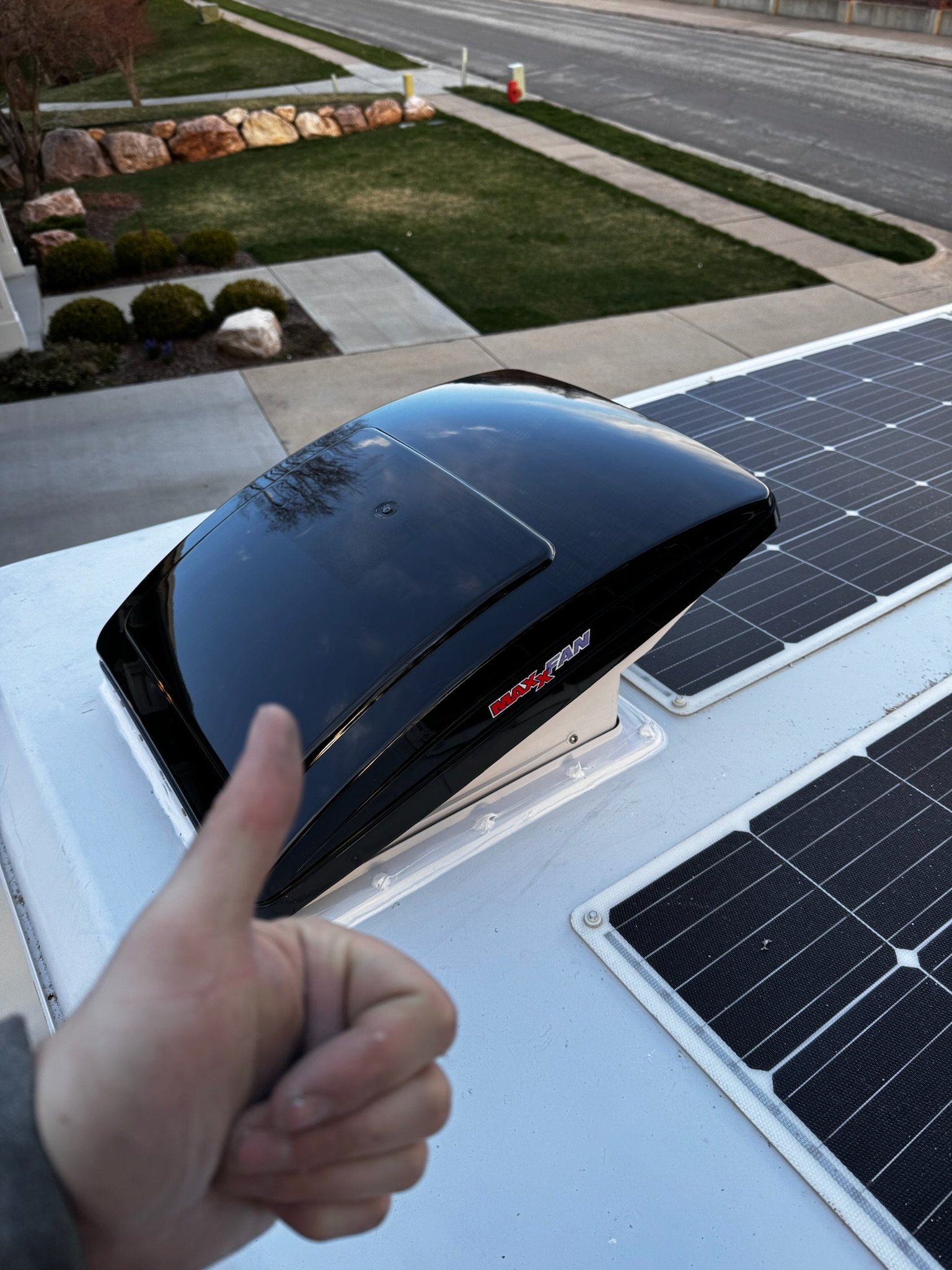
- 6 × 175W Renogy flexible solar panels
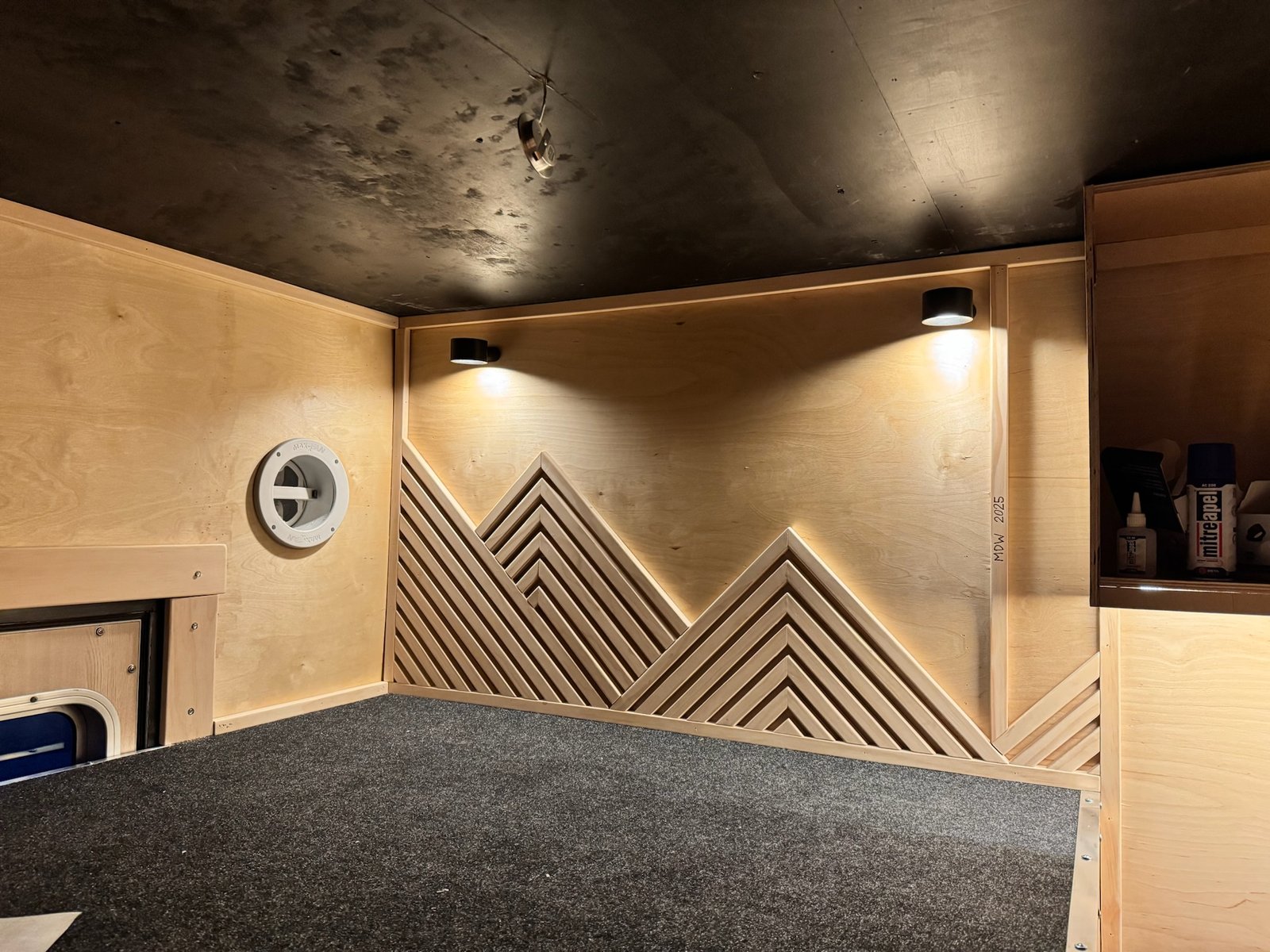
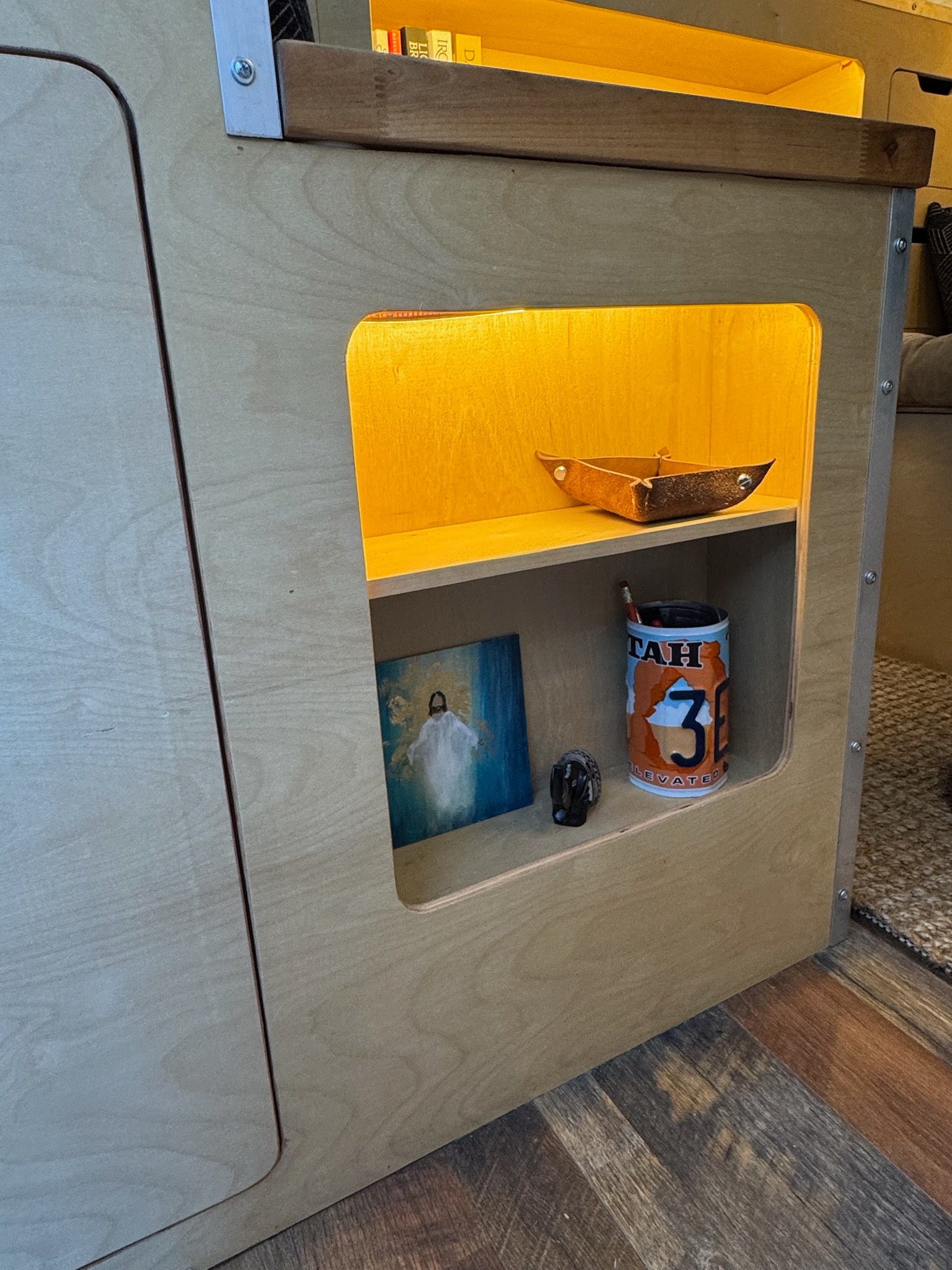
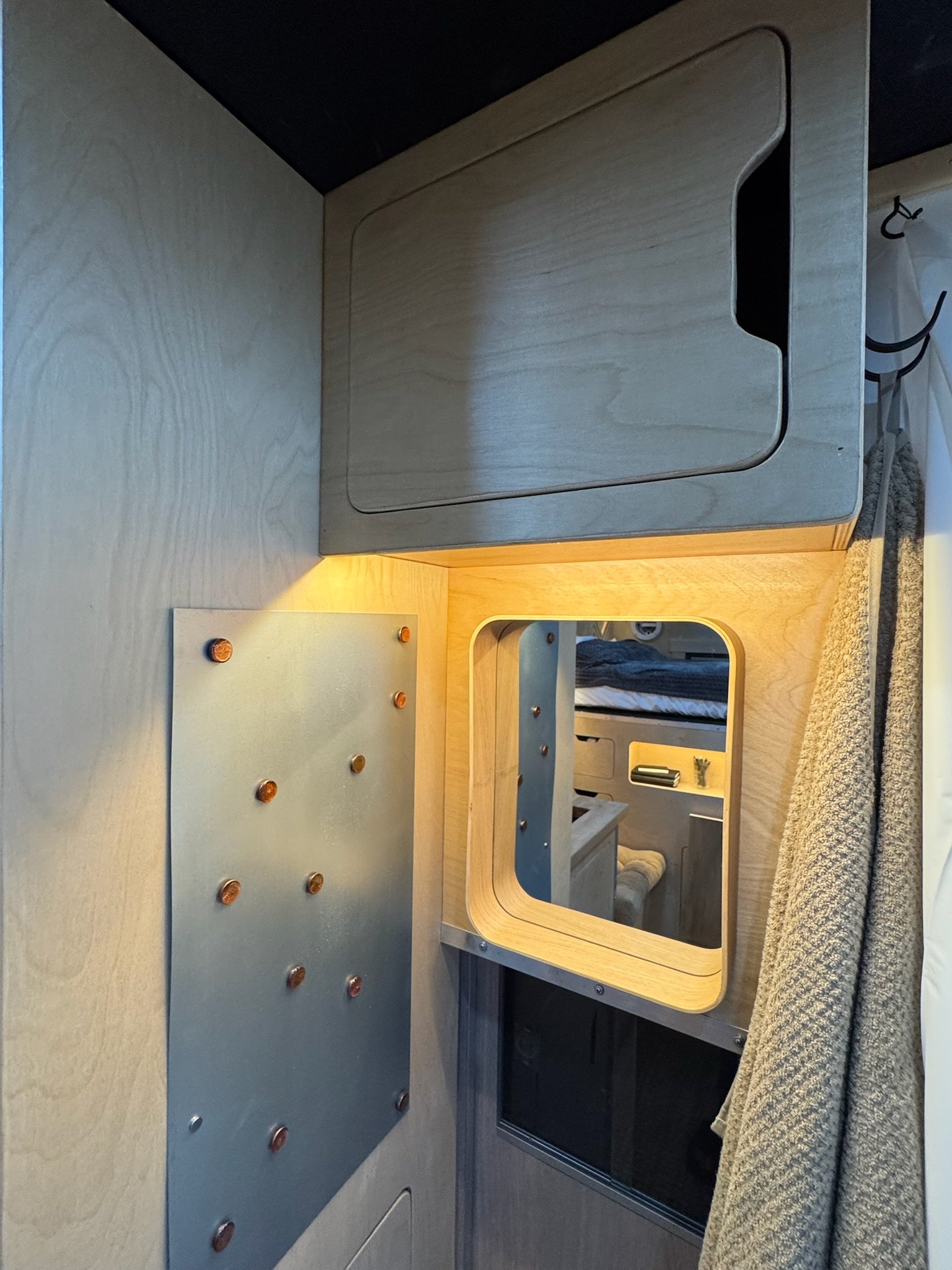
- Custom-built bed, cabinets, and storage throughout the rig
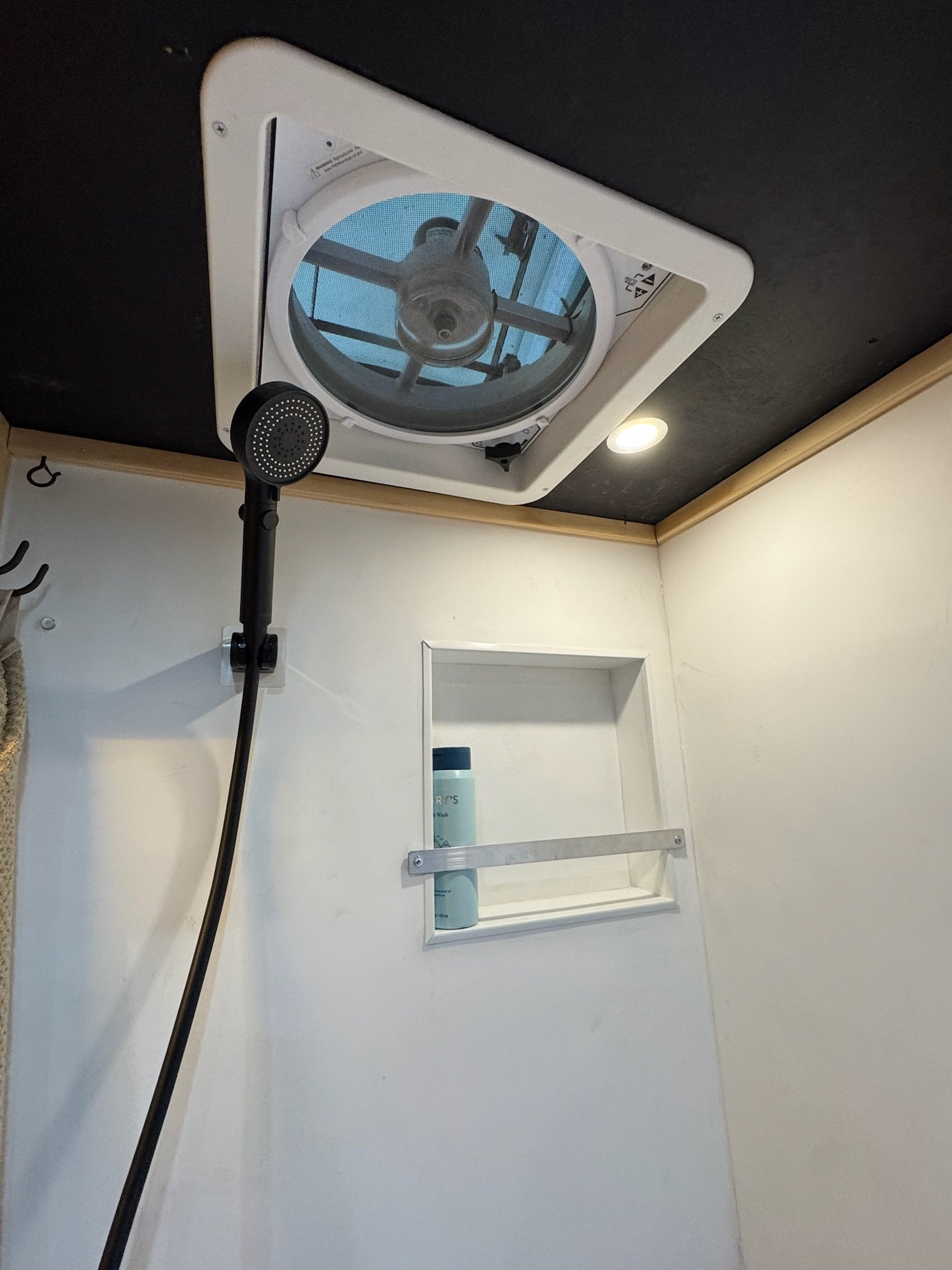
- Tankless hot water with shower and sink plumbing installed
- Ceiling and wall fans for airflow and ventilation
Build Steps – How I Converted the Ambulance
Here’s a step-by-step look at how I’m turning this retired ambulance into a functional tiny home on wheels, from demo day to electrical, plumbing, and custom cabinetry.
Demo Day – Stripping the Old Medical Interior
The first step was completely gutting the original ambulance interior. I pulled out the old cabinets, bench seating, wall panels, and any equipment that didn’t serve the new layout.
This gave me a clean slate and helped reveal wiring paths, insulation needs, and areas that needed repair before rebuilding.
Raising the Roof for Standing Room
One of the biggest upgrades was raising the roof over the entire ambulance box. This created real standing room inside and transformed the space from cramped to livable.
I carefully framed and sealed the new roof section to keep it structurally solid and weather-tight.
Designing the Electrical & Solar System
With the shell prepped, I planned out the high-voltage electrical system using 48V Renogy lithium batteries, a bank of flexible solar panels on the roof, and clean wiring runs throughout the rig.
The goal was to support lights, fans, charging, and future appliances while keeping the system safe and serviceable.
Plumbing the Shower & Sink
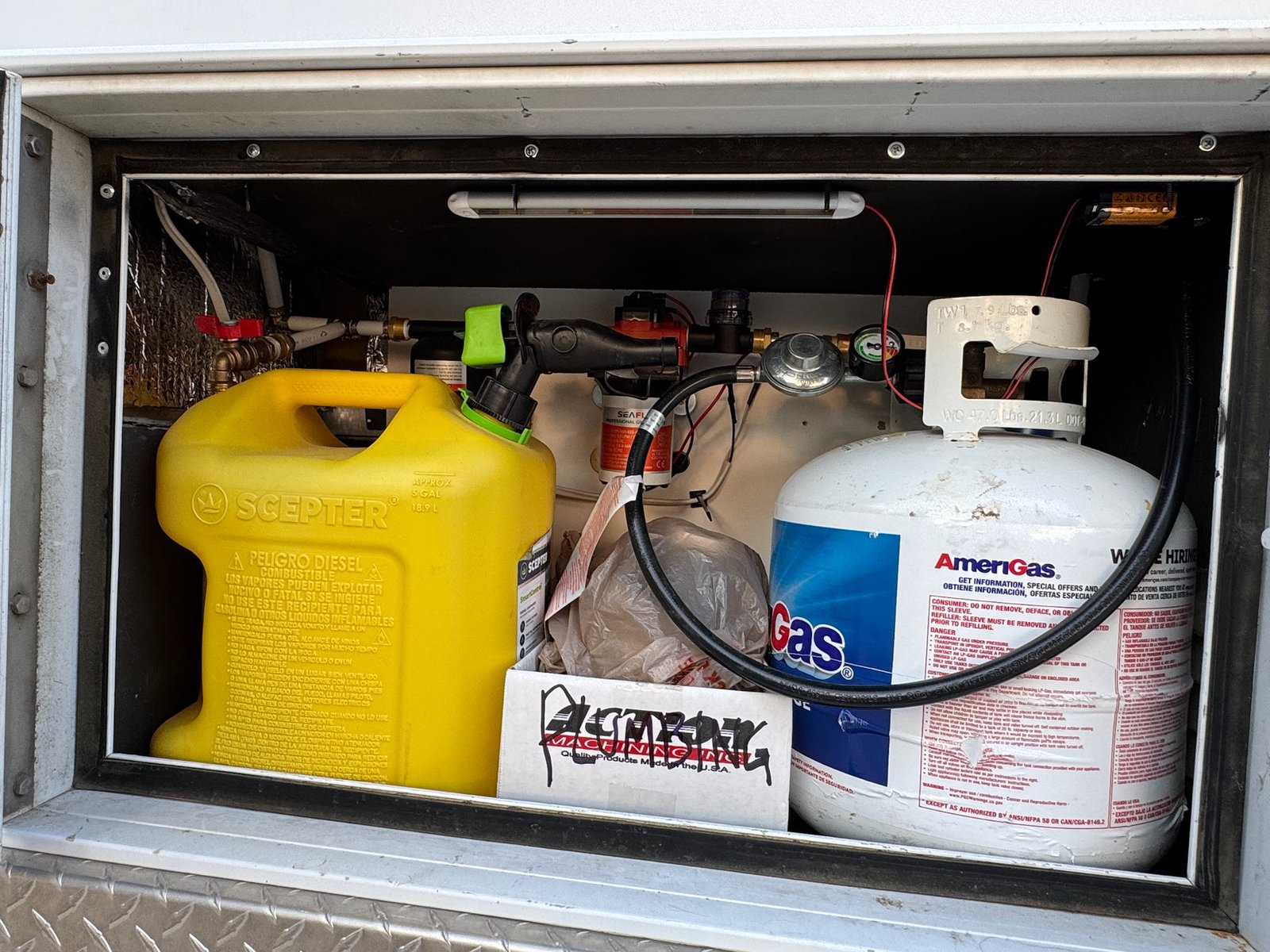
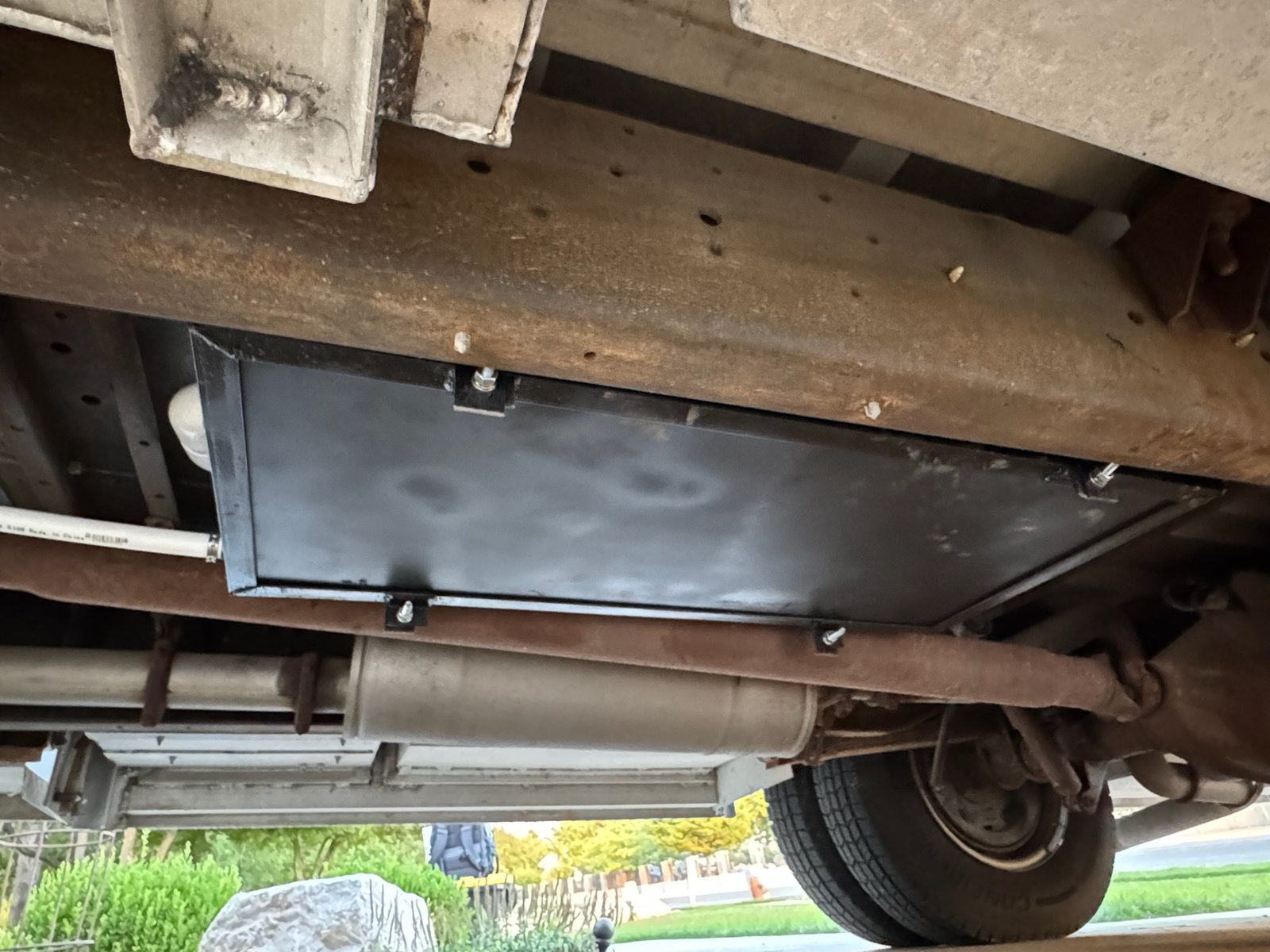
Next came the plumbing: running lines for the shower and sink, integrating the tankless water heater, and planning drain routes that work with the ambulance frame.
Getting the plumbing right is key for everyday usability, especially for longer trips and off-grid camping.
Building Custom Cabinets & Storage
With the infrastructure in place, I started building custom cabinets and storage to fit the exact dimensions of the ambulance walls and wheel wells.
Every drawer, door, and cubby is designed to make use of awkward spaces and keep daily carry items, tools, and gear organized on the road.
Dialing in Comfort & Airflow
To keep the space comfortable, I installed ceiling and wall fans to move air through the rig and help with temperature control, especially when parked.
These finishing touches make the ambulance feel less like a work van and more like a livable tiny home.